The Complete Guide

Everything About Windows & Doors

Every style, every glass option, every rating and every warranty, explained in plain English. Read it start to finish or jump to the part you need.

Part 1

Windows

Styles, rooms, glass, frames, ratings, hardware and when to replace.

Start here

Window Styles Explained

The opening method changes how a window ventilates, cleans, fits around furniture and walkways, and looks from inside and outside.

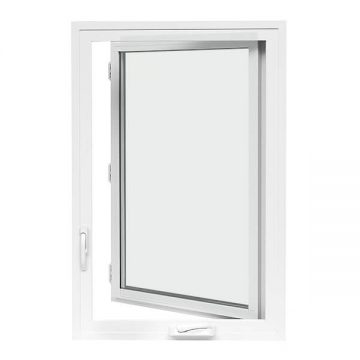
Operable casement window
Side-hinged · crank operation

Casement Windows

Casements are tall, narrow windows that swing outward from the side. We often recommend them when homeowners want easy operation, strong ventilation and a clear, open view.

Choose it whenYou want strong ventilation and a versatile everyday replacement window.
Consider the outsideThe sash projects outward, so check walkways, decks and tight exterior spaces.
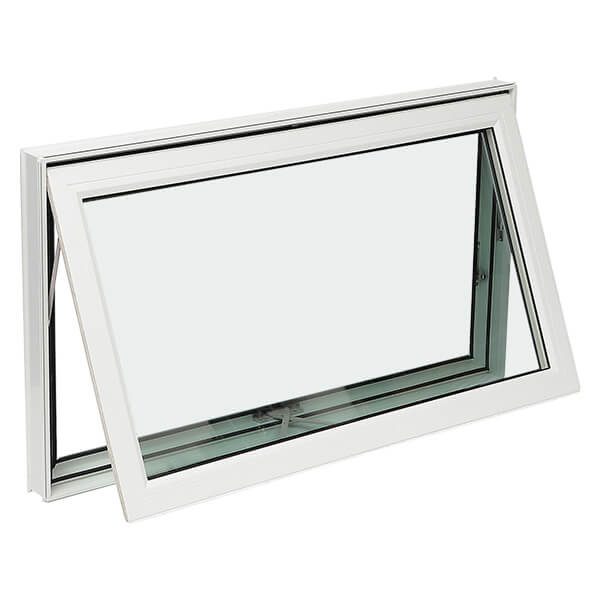
Awning window
Top-hinged · opens outward

Awning Windows

Awning windows are wider than they are tall, hinged at the top and opened from the bottom with a crank. Their shape makes them useful for ventilation in kitchens, bathrooms and combination window layouts.

Choose it whenYou want ventilation from a shorter, wider opening or above another window.
Useful placementOften works well higher on a wall or where privacy and airflow are both priorities.
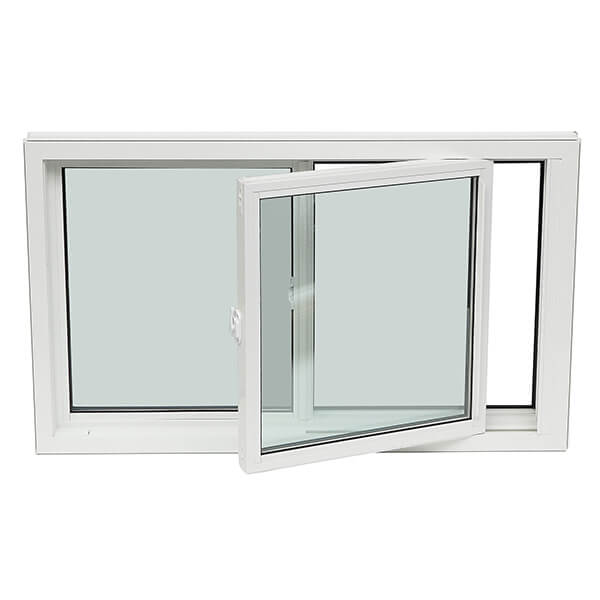
Sliding window
Horizontal operation · no outward swing

Sliding Windows

Slider sashes move side to side. We offer single, double and end-vent configurations that work well where outward clearance is limited and simple operation is important.

Choose it whenThe opening is wide or an outward-opening sash would interfere with a walkway, porch or deck.
Common fitBasements and broad horizontal openings are natural slider applications.
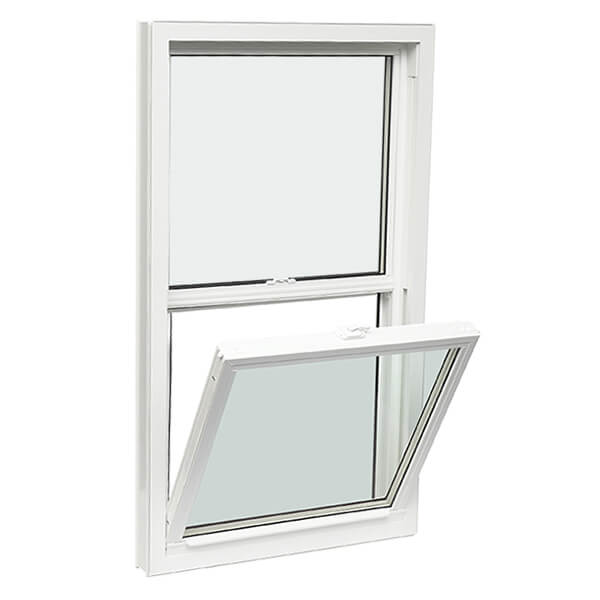
Single hung window
Vertical operation · classic profile

Hung Windows

Hung windows slide vertically. A single-hung window has one operating sash, while a double-hung window has two. We can recommend tilt-in configurations when easier interior cleaning is a priority.

Choose it whenYou prefer a traditional appearance and want ventilation without an outward-projecting sash.
Good exterior fitUseful beside walkways, decks and porches where outward clearance is limited.
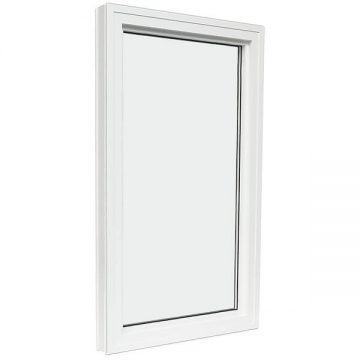
Fixed picture-style window
Non-operating · clean sightline

Picture & Fixed Windows

Fixed windows do not open. They are ideal where ventilation is not needed and you want the glass area to do the work—bringing in light, opening up the view and pairing cleanly with operating units.

Choose it whenThe view and natural light matter more than ventilation at that opening.
Great combinationPair a larger fixed centre section with casement or awning units for both view and airflow.
Bay windowBow window
Projected window · architectural feature

Bay & Bow Windows

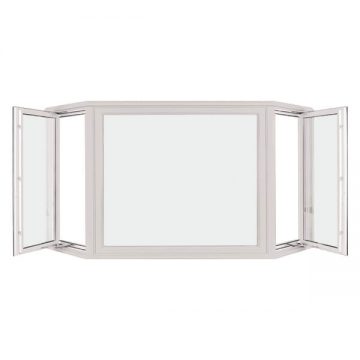
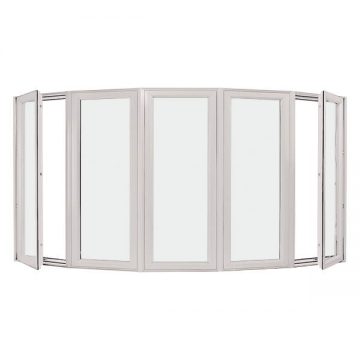
Both project outward and combine multiple window units. Bow windows typically use four or five adjoining units for a softer curve, while bay windows commonly use a larger centre window with angled side units.

Choose it whenYou want a room to feel brighter, more dimensional and more connected to the outdoors.
Bay vs. bowBay feels more angular; bow creates a softer, curved appearance across several units.
Room-by-room starting point

Which Window Works Best in Each Room?

There is no single rule for every house, but these combinations are practical starting points for common replacement projects.

Living Room

Picture + casement for a broad view with ventilation where you need it.

Bedroom

Casement or hung depending on exterior clearance, appearance and the opening.

Kitchen

Casement or awning for easy ventilation and flexible placement around counters.

Bathroom

Awning can be a useful option where privacy and ventilation both matter.

Basement

Slider is a natural fit for many wide, shorter basement openings.

Front Feature Window

Picture, bay or bow when natural light and curb appeal are major priorities.

Performance made simple

The Window Style Is Only Half the Decision

Glass, frame design and installation all affect comfort. We offer premium window systems with double- and triple-glazing options, Low-E glass and performance-focused frame designs.

What is inside the frame matters.

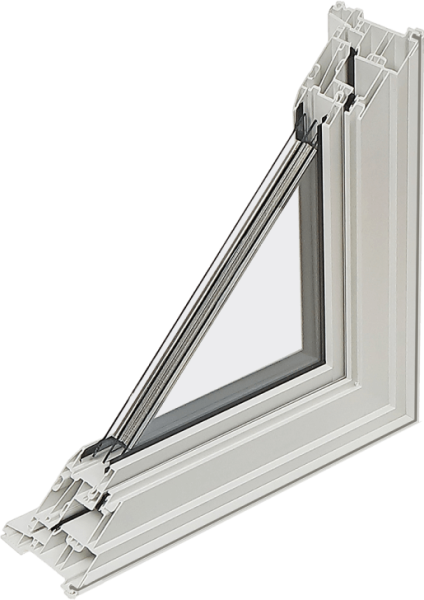
Modern window performance comes from the full system: insulated glass, Low-E coatings, sealed air spaces, frame chambers, hardware and proper installation.

Cross-section of a premium vinyl window frame and insulated glass
GlassDouble Glazing

Two panes of glass separated by an insulated space. A common modern replacement option when balancing performance and budget.

GlassTriple Glazing

Three panes create another insulating layer. It can improve thermal comfort and is worth considering when efficiency is a higher priority.

CoatingLow-E Glass

A low-emissivity coating helps manage heat transfer through the glass while still allowing natural light into the home.

FrameMulti-Chamber Design

Our premium vinyl window systems use multi-chamber frame designs to support structural strength and insulating performance.

Air & WaterWeather Sealing

The window needs to close and seal properly. Hardware, drainage and the interface between window and wall all matter.

InstallationProfessional Fit

A high-performance window still depends on accurate sizing, proper shimming and a well-sealed installation around the opening.

Double vs. triple pane

Which Glazing Package Should You Buy?

There is no automatic answer for every house. The right choice depends on the existing windows, exposure, comfort goals, budget and the window configuration.

Double Glazing

A practical modern option for many replacement projects.

✓Lower initial cost than a comparable triple-glazed configuration.
✓Available with Low-E and other performance options.
✓Can be an effective upgrade from old, drafty or failed windows when properly installed.
Inside the window

Frames, Glass and Ratings Explained

Two windows can look identical and perform very differently. These are the parts that decide how warm, quiet and long-lasting a window is.

FrameVinyl Frames

The window systems we install are vinyl. Vinyl does not rot, never needs painting and holds up well to Ontario freeze-thaw cycles. Inside, the frame is split into several hollow chambers that slow heat loss and add stiffness.

GlassSealed Glass Units

Double and triple glazing are built as one sealed unit: panes of glass held apart by a spacer, sealed around the edge. When that seal fails, you see fog or moisture between the panes.

GlassLow-E Coating

A microscopically thin metal coating on the glass. It reflects heat back into the room in winter and cuts solar heat and UV in summer, while still letting daylight through. UV is what fades floors and furniture.

GlassArgon Gas

The space between the panes is filled with argon, a harmless gas that is heavier than air. It moves heat more slowly than air, so the inside pane stays warmer.

GlassWarm-Edge Spacer

The strip that separates the panes. A warm-edge spacer conducts less cold than old aluminum spacers, which means less condensation and frost along the bottom edge of the glass.

RatingU-Factor

How fast heat escapes through the whole window. Lower is better. It is the most useful single number for comfort in a Canadian winter.

RatingEnergy Rating (ER)

A Canadian rating that balances heat loss, solar heat gain and air leakage into one number. Higher is better.

RatingENERGY STAR

A label for windows and doors that meet Natural Resources Canada efficiency levels. It is a quick way to know a product clears a tested performance bar.

The parts you touch every day

Hardware, Screens and Security

Hardware is what you live with daily. It decides how easily a window opens, how tightly it closes and how secure it feels.

Window Hardware

What to look for when you compare.

✓Casement and awning cranks with fold-away handles, so blinds and shutters close flat.
✓Multi-point locks on casements pull the sash tight against the weatherstrip at several points, not just one.
✓Tilt-in sashes on hung windows, so you can clean the outside glass from inside the house.
✓Interior screens on casements and awnings, which you can remove from inside for cleaning.

Door Hardware

Where security really comes from.

✓Multi-point locking on entry doors latches at the top, middle and bottom of the slab. It also keeps fiberglass doors straighter over time.
✓Keyed patio door locks and secondary bars for sliding doors at ground level.
✓Adjustable rollers on sliding doors, so the panel can be re-levelled as the house settles.
✓Pet mesh screens that resist claws on patio doors.
Is it time?

Signs Your Windows Need Replacing

Some problems point to the glass, some to the hardware or frame, and some to the installation around the opening.

Noticeable DraftsAir movement around the sash or frame can make a room uncomfortable and increase heating or cooling demand.
Fog Between PanesMoisture trapped inside an insulated glass unit can indicate a failed glass seal.
Hard to Open or LockBinding, worn hardware or distorted components can make everyday operation difficult.
Cold Interior GlassOlder or lower-performing glazing can create colder interior surfaces and uncomfortable areas near the window.
Part 2

Doors

Entry and patio doors, where each fits, performance, options and when to replace.

Start here

Entry & Patio Doors Explained

Material, glass and how the door opens change how it looks, how secure it feels and how it holds up to Ontario weather.

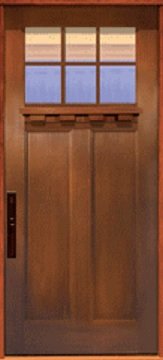
Stage fiberglass craftsman entry door in fir grain
Fiberglass skin · composite frame

Fiberglass Entry Doors

The skin is fiberglass, with full-length composite stiles and composite top and bottom rails, so there is no wood to soak up water. It resists moisture, dents and splintering, and comes smooth or in oak and mahogany grain you can paint or stain.

Choose it whenYou want a door that looks good for years with very little upkeep.
Style rangeCraftsman, panel, arch-top and flush designs, with or without decorative glass.
Stage Linea steel entry door with horizontal grooves
Steel panel · contemporary profile

Steel Entry Doors

Steel doors suit clean, modern exteriors: flat or grooved panels, tall sizes and long pull handles. Pair one with a full-height sidelite to bring light into the entry without giving up privacy at the door itself.

Choose it whenYour home has a contemporary look and you want a strong, simple door.
Good pairingMulti-point locks and a matching sidelite for a finished, secure entry.
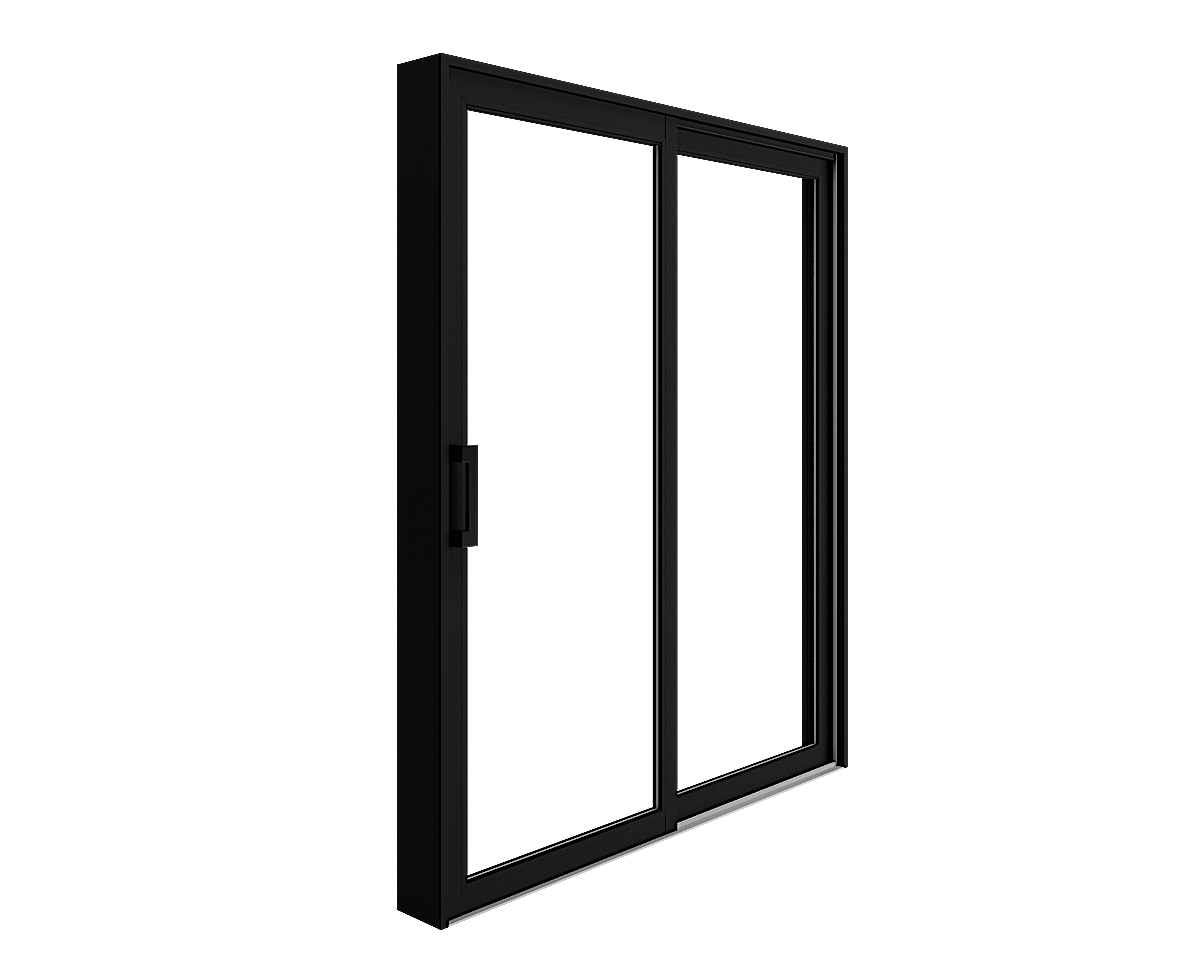
Black two-panel sliding patio door
Horizontal glide · 2, 3 or 4 panels

Sliding Patio Doors

Welded vinyl sashes reinforced with galvanized steel, on adjustable nylon rollers rated up to 440 lbs per panel. A twin-lock system, heavy-duty screen and anodized aluminum sill come standard, with tempered Low-E glass and argon.

Choose it whenYou need deck or yard access without a door swinging into the room.
SizesTwo panels from about 5 to 8 feet wide, up to four panels near 16 feet.
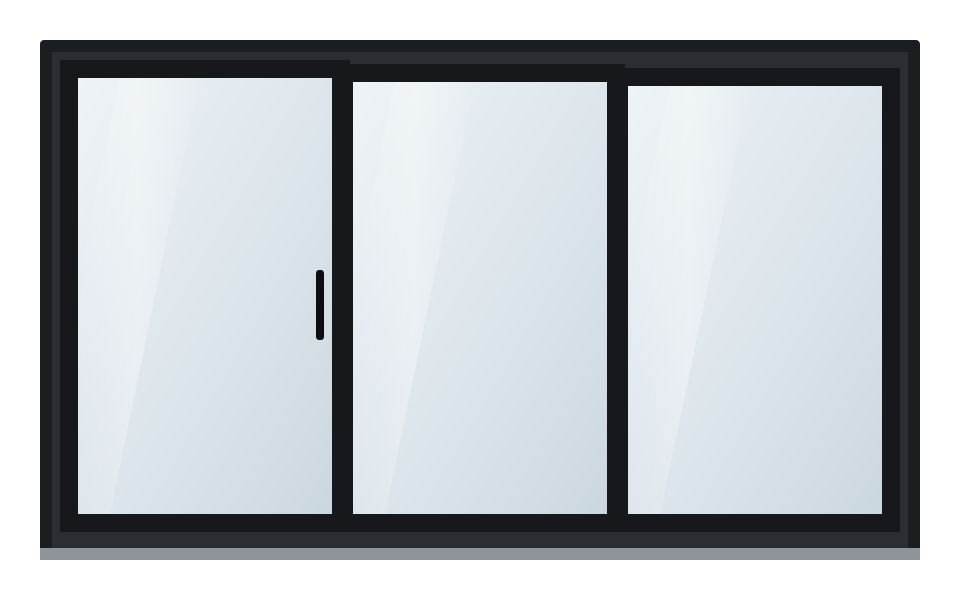
Black three-panel stacking patio door
Stacked panels · extra-wide opening

Stacking Patio Doors

Panels slide and stack behind one another, so a large part of the wall opens at once. Three panels reach about 12 feet, six panels up to 21 feet. Laminated security glass, better sound control and a retractable screen are available.

Choose it whenThe view and the indoor-outdoor connection are the reason for the project.
Plan aheadWide openings need the right header, so we check the wall before quoting.
Room-by-room starting point

Which Door Works Best Where?

Practical starting points for the most common door replacements.

Front Entry

Fiberglass or steel with sidelites or a transom if you want more light.

Side or Garage Entry

Fiberglass with a small doorlite or none, for privacy and low upkeep.

Kitchen to Deck

2-panel slider for everyday access without swing space.

Family Room

3- or 4-panel slider for a wider glass wall to the yard.

Great Room

Stacking patio door when you want to open up the whole wall.

Sunny Exposure

Built-in mini blinds between the glass to control light with no dusting.

Performance made simple

The Door Style Is Only Half the Decision

Glass, locks, rollers, sills and installation decide how a door feels every day and how it handles wind, rain and cold.

What is built into the frame matters.

Steel-reinforced sashes, welded corners and twin locks keep a patio door rigid, secure and smooth for years.

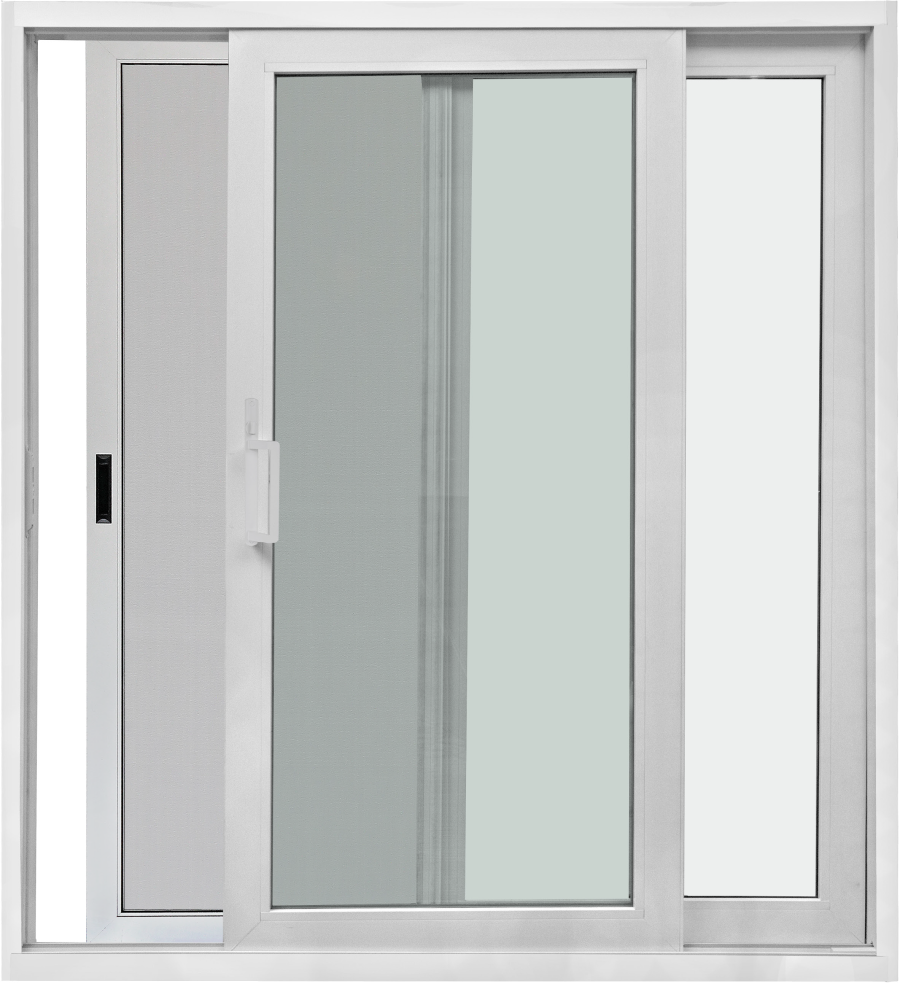
White sliding patio door with screen
GlassLow-E & Argon

Patio doors come standard with tempered Low-E glass and argon gas, in double or triple glazing.

SecurityTwin & Multi-Point Locks

A twin-lock system on patio doors and multi-point hardware on entry doors give a firmer, safer close.

GlassLaminated Security Glass

Optional on stacking doors. The glass stays bonded to its interlayer if broken, making forced entry harder.

FrameSteel-Reinforced Sash

Galvanized steel in the vertical sashes reduces flex in high wind and adds strength.

Air & WaterAdjustable Sills

Entry door sills adjust for a tight seal and are designed to keep water out of the threshold.

InstallationProfessional Fit

Square, plumb and well sealed. A great door still depends on how it is set into the opening.

Make it yours

Options Worth Knowing About

Most of these can be added to the door you choose. We go through them with you at the estimate.

Entry Door Options

Shape the look and the light at your front door.

✓Decorative and privacy glass, from clear to fully obscured.
✓Sidelites and transoms to brighten the entry.
✓Paint colours, wood-grain stains and handle sets in several finishes.
Is it time?

Signs Your Doors Need Replacing

Some problems point to the slab or glass, some to the hardware, and some to the frame and installation.

Drafts at the DoorLight or air around the edges means worn weatherstripping or a door that no longer seals.
Hard to Slide or LockWorn rollers, a bent track or a sagging door make everyday use a chore.
Fog Between PanesMoisture inside the glass means the sealed unit has failed.
Rot, Rust or DentsDamaged slabs and sills let water in and look tired from the street.
Part 3

Installation & Warranty

What happens on install day, insert vs. full-frame, and Stage warranty coverage.

What to expect

How Installation Works

A premium window installed badly performs like a cheap one. The installation is where most comfort problems start or end.

1. Free estimateWe look at your openings, talk about how each room is used and recommend styles, glass and options. You get a written estimate. Every project is priced individually.
2. Exact measurementEach opening is measured precisely. Windows and doors are made to order for your home, not pulled off a shelf.
3. ManufacturingYour order is built by Stage Windows & Doors in Vaughan. We confirm your install date once it is ready.
4. RemovalOld units come out carefully, with floors and furniture protected. We check the opening for rot or water damage before anything new goes in.
5. Install and sealThe new unit is levelled and shimmed, insulated with low-expansion foam (it won't bow the frame) and sealed inside and out against air and water.
6. Finish and clean-upInterior and exterior trim is finished, hardware is adjusted so everything opens and locks smoothly, and we take the old units away. Most installs take 1–2 days.

Insert (Retrofit) Installation

The new window fits inside the existing frame.

✓Less disruption to interior trim and exterior brick or siding.
✓Works well when the existing frame is solid, square and dry.
✓The trade-off is slightly less glass, because the new frame sits inside the old one.

Full-Frame Installation

Everything comes out, down to the rough opening.

✓The right call when the old frame is rotted, out of square or leaking.
✓Lets us insulate and seal the whole cavity around the window properly.
✓Maximises the glass area and gives a completely fresh finish.
Backed by the manufacturer

Warranty Coverage

Everything we install is made by Stage Windows & Doors and carries Stage's manufacturer warranty. Below is a summary of Stage's published terms. The full terms and exclusions are on stagewindows.com/warranty.

Windows

White vinyl frame & sashLimited lifetime
Sealed glass units20 years
Hardware15 years
Painted finishes & interior laminate15 years
Glass cracked by a manufacturing defect1 year
Screen tears and punctures10 days

Entry Doors

White vinyl frameLimited lifetime
Steel door panel10 years
Fiberglass panel, with multi-point lock5 years
Fiberglass panel, without multi-point lock1 year
Light / dark factory paint15 / 10 years
Factory stain finish3 years
Stock decorative glass inserts10 years
Custom glass inserts1 year

Patio Doors

Vinyl frame & sash25 years
Sealed glass units20 years
Hardware15 years
Paint10 years
Mini blinds between the glass5 years
Screen tears and punctures10 days
Parts, not labourStage's warranty covers replacement parts. Labour and other costs are not part of the manufacturer's coverage.
Register itStage asks that products be registered soon after installation for the warranty to be valid. We'll walk you through it.
Selling the house?Stage's window and patio door coverage can transfer to a new owner with a notice of transfer. The entry door warranty covers the original owner of a single-family home only.
What it doesn't coverBroken glass, normal fading from sun, condensation from indoor humidity, house settling and repairs made by others.
Part 4

Care & Reference

Maintenance, a searchable glossary and answers to common questions.

Make them last

Care and Maintenance

Vinyl windows and modern doors need very little care. A few minutes twice a year keeps them working like new.

Wash with mild soapWarm water and a soft cloth for frames and glass. Avoid abrasive cleaners and solvents, which can scratch vinyl and damage coatings.
Keep tracks and sills clearVacuum the tracks on sliders and patio doors. Keep the small drainage (weep) holes at the bottom of the frame open so water can escape.
Lubricate moving partsA little silicone spray on cranks, hinges, locks and rollers once a year. Skip oil-based products that attract dirt.
Check the weatherstripLook for torn or flattened seals each fall. A good seal is most of what keeps drafts out.
Manage indoor humidityCondensation on the inside of the glass in winter usually means humid indoor air, not a bad window. Run bathroom and kitchen fans and keep humidity moderate.
Look at the caulkingCheck the exterior sealant around the frame every couple of years. Cracked caulking is an easy fix before it becomes a leak.
Plain-English glossary

Terms You'll Hear

Search or filter, then tap a term to see what it means.

SashWindows

The part of the window that holds the glass and moves when you open it.

FrameWindows

The fixed outer part that sits in the wall and holds the sash.

MullionWindows

The vertical or horizontal bar that joins two window units together.

Sealed unit (IGU)Glass

Two or three panes of glass sealed together as one insulated piece.

Low-EGlass

A thin invisible coating on the glass that reflects heat and blocks UV.

ArgonGlass

An insulating gas sealed between the panes.

Warm-edge spacerGlass

The strip between panes, made to conduct less cold than aluminum.

U-factorRatings

How fast heat escapes through a window. Lower is better.

Energy Rating (ER)Ratings

A Canadian single-number efficiency score. Higher is better.

Weep holesWindows

Small drainage slots at the bottom of a frame that let water out.

BrickmouldWindows

The exterior trim around a window or door frame.

SideliteDoors

A narrow glass panel beside an entry door.

TransomDoors

A glass panel above a door or window.

Multi-point lockDoors

A lock that latches at several points along the door or sash.

Grilles (GBG)Windows

Decorative bars, often sealed between the glass so they never need cleaning.

SlabDoors

The door panel itself, without the frame.

Window & door questions

Frequently Asked Questions

Straight answers before you request a measurement or estimate.

What is the best all-around replacement window style?

Casement windows are a strong all-around starting point when ventilation, clear views and a tight closing action are priorities. The best choice still depends on the opening, room layout and exterior clearance.

What is the difference between double and triple glazing?

Double glazing uses two panes of glass; triple glazing uses three. Triple glazing adds another insulating layer and can improve thermal comfort, but the best package depends on the home, exposure, style and budget.

Which windows are better beside a walkway or deck?

Sliding and hung windows are useful where exterior clearance matters because they do not swing outward into the walkway, porch or deck.

What gives me the most natural light?

A fixed or picture window is a good choice when ventilation is not required and the priority is an uninterrupted glass area, view and natural light.

Are bay and bow windows the same?

No. Both project outward, but a bay window typically has a larger centre unit and angled sides. A bow window usually uses four or five adjoining units to create a softer curved appearance.

Do I need to know the exact specifications before I contact you?

No. Tell us what you want to improve—drafts, appearance, ventilation, view, operation or energy performance. We can recommend the style and glazing package after reviewing the opening and your priorities.

Fiberglass or steel: which entry door is better?

Fiberglass is the strongest all-round pick for most homes because it resists moisture, dents and rot and can be painted or stained. Steel suits modern exteriors with clean, flat panels.

How wide can a patio door be?

Sliding patio doors run from about 5 feet wide with two panels to nearly 16 feet with four. Stacking patio doors reach about 12 feet with three panels and up to 21 feet with six.

Are sliding patio doors secure?

Yes. The doors we install use a twin-lock system with heavy-duty hooks and steel-reinforced sashes, and laminated security glass is available on stacking doors.

Can I get blinds inside the glass?

Yes. Mini blinds sealed between the panes are available on many patio door sizes. They tilt and lift, and never need dusting.

Can you add sidelites or a transom to my entry?

Usually, yes. We check the opening and wall framing during the measurement and tell you what fits.

Do I need to know the exact door size before I contact you?

No. Tell us which door you want to replace and what bothers you about it. We measure and recommend the right size and options.

What warranty comes with the windows and doors?

Everything we install carries the Stage Windows & Doors manufacturer warranty: a limited lifetime warranty on white vinyl window frames and sashes, 20 years on sealed glass units and 15 years on window hardware. Door coverage varies by component. See the warranty section of this guide for the full breakdown.

How much do new windows or doors cost?

Every project is priced individually, because size, style, glass package, finish and installation method all change the price. We give you a free written estimate after seeing your openings.

Ready to talk about your project?

Tell us your city and what you want to replace. We will help you pick the right windows and doors and give you a free written estimate.